10 tips for choosing an effective domain name

Choosing a domain name is the first challenge to overcome when going online. It may seem complicated, but it becomes much simpler if you follow a few rules of thumb!
Because changing your domain name later on can be tedious, this choice is crucial. A lot is at stake: the name can make a huge difference to your search engine optimisation (SEO), and therefore to the traffic your site will generate. Here are our tips for choosing your domain name wisely.
1) Choose a name that reflects who you are
Whether it is your own name or that of your company, shop or blog, your domain name should make you instantly recognisable.
2) Choose a short, simple name
The shorter your domain name, the more easily visitors will type it into a search engine or address bar.
3) Choose a unique name
Check that a similar name does not already exist. For example, if you choose a .co.uk domain, make sure the .com is not already taken, and vice versa.
4) Choose an extension suited to your audience
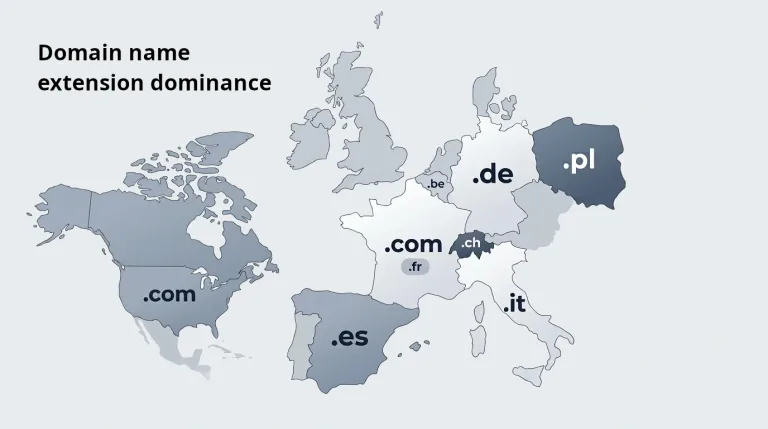
The extension (.co.uk, .fr, .com, .eu, .org, .shop, .photo, etc.) often defines your audience. Targeting a British audience? Register a .co.uk or .uk. Targeting a worldwide audience? Register a .com. Are you a charity or association? Register a .org. The nature of your business and your audience should determine your domain name extension.
5) Protect yourself by registering similar names too
You wouldn’t want someone to copy your site under a very similar name. Depending on your business, it is well worth also registering the .com, .eu, .co.uk and so on.
6) Avoid accents and special characters
Although it is possible to register domain names containing special characters, hyphens (-) or accented letters, this is not recommended, as they are harder to type and more prone to error. Put simply, they can make visitors less inclined to visit your site, and may even affect how much they trust it. If you sell scarves, “myscarves.co.uk” will always be a better choice than “my-scarves.co.uk”: it is easier to type and ranks better.
7) Consider acronyms
“my-great-online-shop.co.uk” might be rather long and tedious to type, unlike the acronym “mgos.co.uk”. This can sometimes prove advantageous.
8) Choose a name that is easy to pronounce
When you give out your site’s name, or when visitors talk about your site, it is better if the name is easy to pronounce.
9) Choose a name that is easy to spell
If you need to spell out your site’s name to the people you deal with, the simpler the better.
10) Include a keyword in your name
This choice sometimes has to be made when you set up your business, but where possible, including your company’s main activity in the domain name can be worthwhile. For example, if you sell cars, you could include “car” in your domain name.
So, ready to take the plunge? Register your domain with HaiSoft now